USD
1.7000
%0,47
EUR
2.0183
%0,47
GBR
2.3633
%0,47
RUB
0.0232
%0,47
TRY
0.2009
%0,47


A high-level side event at the Council of Europe's Parliamentary Assembly lays bare the growing crisis of enforcement and the political paralysis that enables it.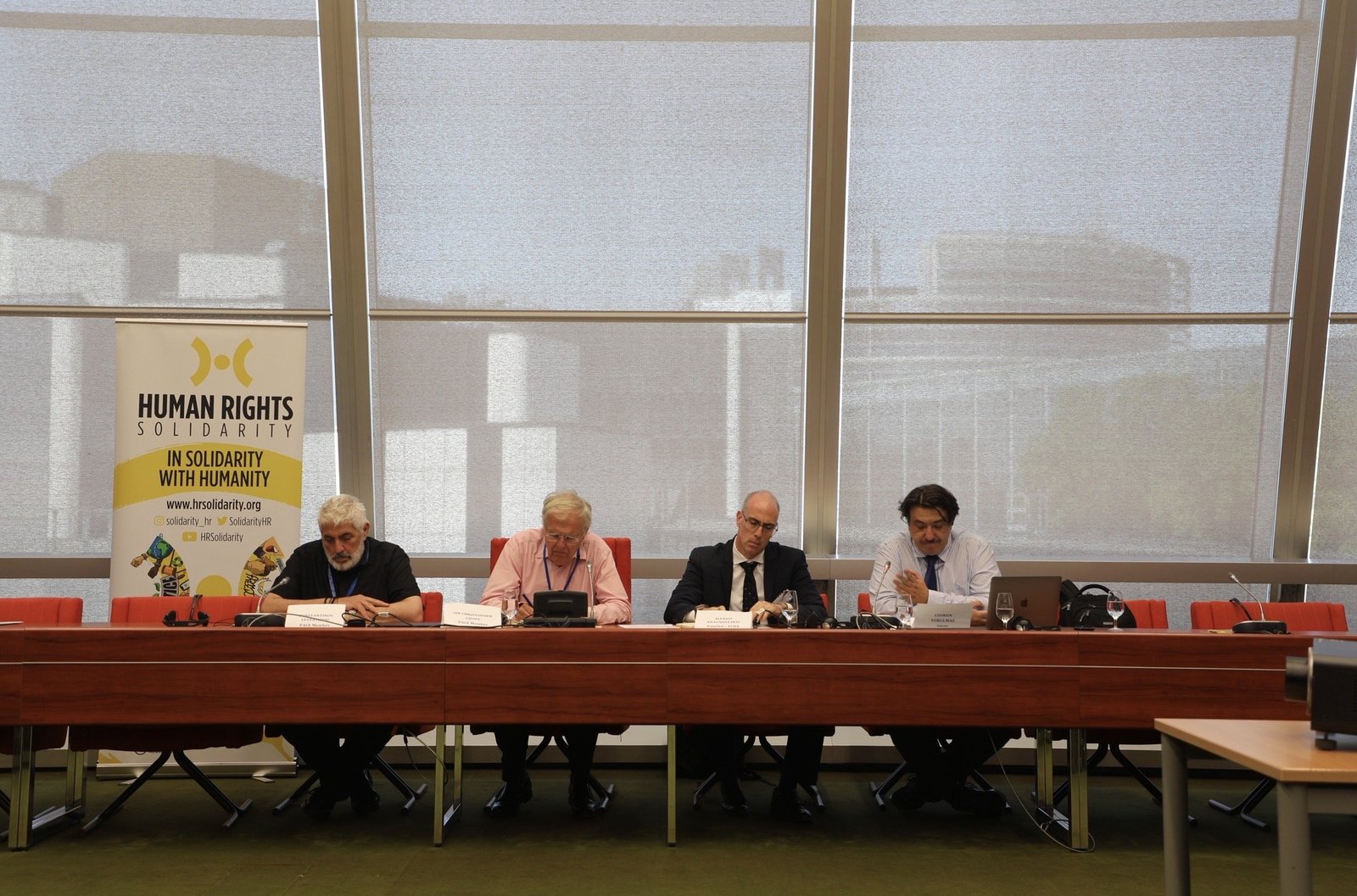
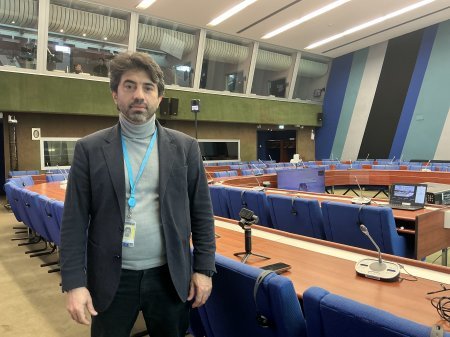
STRASBOURG, 24 June 2026 — The timing was deliberate. On the opening day of the Parliamentary Assembly of the Council of Europe's (PACE) Summer Session, human rights organisations Human Rights Solidarity and The Arrested Lawyers convened an event on the margins that cut to the heart of what many see as the most corrosive threat to the European human rights architecture: the systematic refusal of a founding member state to honour the rulings of the European Court of Human Rights (ECtHR).
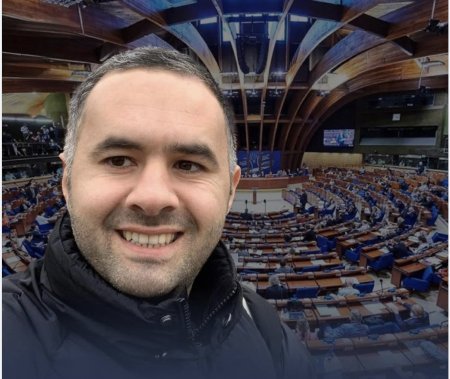
The side event, sponsored by Sir Christopher Chope, drew a room that included Turkish and Azerbaijani journalists a conspicuous presence reflecting the geopolitical weight of what was being discussed. The panel brought together Alexis Anagnostakis, human rights lawyer and officer at the European Criminal Bar Association; Constantinos Efstathiou, PACE member from Cyprus and rapporteur on the implementation of European Court judgments; and Sir Christopher Chope himself. Moderation was handled by lawyer Coşkun Yorulmaz.
The subject was the enforcement of European Court of Human Rights judgments. The subtext was Turkey and the question of how much longer the Council of Europe system can absorb a member state's open defiance before it destroys itself.
The Man Holding the Gavel
Sir Christopher Chope has been, on and off for some two decades, a member of the Parliamentary Assembly of the Council of Europe a veteran of its Legal Affairs Committee and Migration Committee, and currently a member of the committee responsible for electing judges to the Court itself. It is precisely from that vantage point that he has grown increasingly alarmed at what he describes as the Court's self-destruction.
A British Conservative MP for Christchurch in Dorset since 1997, Chope previously served as MP for Southampton Itchen from 1983 to 1992 and held ministerial office under Margaret Thatcher and John Major. But it is his parliamentary assembly work that has placed him at the centre of the enforcement crisis. In his role on the committee that appoints judges to the European Court, he has repeatedly asked a question that resonates through the corridors of Strasbourg: "Why do you want to join a court as a judge when the judgments of that court are not implemented by the people in respect of whom those judgments have been given?"
The Scale of the Crisis
The statistics presented inside the room were, by any measure, extraordinary.
More than 36 percent of all cases currently pending before the European Court of Human Rights — some 22,450 out of 61,250 — are cases against Turkey. Turkey leads the Council of Europe not only in the number of pending applications but also in the number of leading judgments and non-implemented decisions awaiting review by the Committee of Ministers. As of June 2024, 156 leading cases and 375 repetitive cases remained unimplemented. Turkey has 137 leading cases pending implementation — the highest number among Council of Europe member states. A further 890 applications were accepted by the Court the day before the side event alone. These cases collectively concern more than a million people. Among them are approximately 500,000 individuals convicted under Turkish anti-terror laws — convictions the Court has found to be unlawful.
Turkey is also, as speakers were at pains to note, only the second country in Council of Europe history to face an infringement procedure under Article 46§4 of the European Convention — the most serious collective response the system can muster. The first was Azerbaijan. Turkey's defiance has continued unabated.
The Courtroom as Political Instrument
Two cases dominated the discussion, and both have become symbols of something beyond their individual facts.
Osman Kavala has been in prison for more than eight years. A civil society leader and arts patron, he was arrested in October 2017, acquitted in February 2020, immediately re-arrested on new charges, and ultimately sentenced to aggravated life imprisonment in April 2022 — a sentence handed down by the same courts the ECtHR has twice ordered to release him. The European Court did not wait for Turkey's Constitutional Court to exhaust domestic remedies before ruling — a notable procedural departure that signals how seriously Strasbourg views the situation.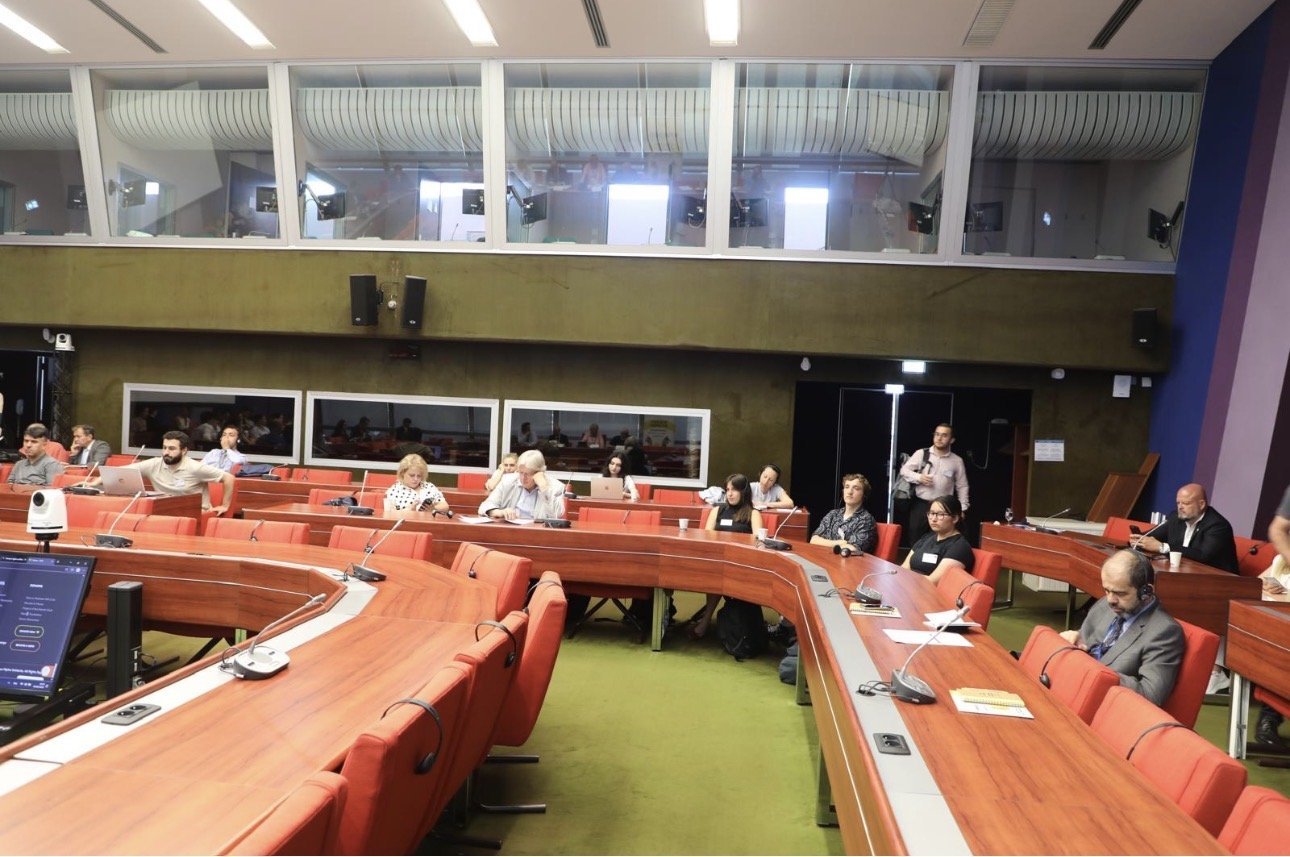
Stefan Schennach, former PACE rapporteur for Turkey, was in the room and spoke from lived experience. He has visited Kavala in prison twice. He described the conditions following Kavala's life sentence: visits from his wife — a professor — are now permitted only once a month, behind glass. When Istanbul's Mayor Ekrem İmamoğlu was placed in the same prison, Schennach noted drily, the surroundings were promptly tidied up. "He said, Stefan, look around, do you see something has changed?" The gallows humour did not obscure the reality: Kavala is isolated, and isolation, Schennach said flatly, is a crime.
Selahattin Demirtas, former co-chair of the Peoples' Democratic Party (HDP), has been behind bars since November 2016. In May 2024 — nearly four years after the ECtHR's Grand Chamber ordered his release — he was sentenced to 42 years in prison on charges rooted in his political activity and social media posts. His wife has the legal right to visit him; she requires two full days of travel to exercise it. Most of his former colleagues and aides have also been arrested. "From İstanbul to the prison where Demirtaş is held," Schennach said, "it is seven hours on the road. This is horrible, but it is the truth."
The ByLock Catastrophe
Beyond these headline cases lies a mass legal crisis without European precedent in the post-Cold War era.
In September 2023, the Grand Chamber of the European Court of Human Rights delivered its landmark ruling in Yalçınkaya v. Turkey. Yüksel Yalçınkaya was a teacher convicted of membership in a terrorist organisation. The decisive evidence against him was his alleged use of ByLock — an encrypted messaging application that Turkish authorities claimed was used exclusively by those they held responsible for the 2016 coup attempt
The Grand Chamber found violations of Article 7 (no punishment without law), Article 6(1) (right to a fair trial) and Article 11 (freedom of assembly). Critically, the Court ruled that the Turkish judiciary's blanket treatment of ByLock use as proof of terrorism membership created what amounted to an automatic presumption of guilt — a conviction mechanism the Court described as "akin to strict liability," clearly contrary to the requirements of Article 7.
What made the ruling historic was its explicit scope: the Court stated the judgment was applicable to more than 8,000 cases already pending in Strasbourg and to over 100,000 cases before Turkish courts expected to reach the Court in coming years. As of the day of the panel, violations of Articles 6 and 7 in this category had exceeded 3,500 individual rulings.
Europe is Hesitant
The most provocative intervention came from Alexis Anagnostakis, who opened with a confession that landed like a challenge.
"We share responsibility," he said. "When I say we share responsibility, I do not refer only to the state we are here to discuss. I mean us also. I mean European institutions, European governments, European lawyers, European bar associations and the architecture of the system."
Anagnostakis drew a distinction that cut to the core of the gathering's unease. "Kavala is still in prison not because one government is strong," he said. "He is still in prison because Europe is hesitant." Demirtaş, he argued, remains imprisoned not because Turkey is defiant, but because defiance costs very little. The Committee of Ministers has tools. Article 46 was invoked — "a courageous and historic step," he acknowledged. And yet here, in the same room, the same cases.
He zeroed in on the mass prosecution of lawyers in Turkey. Approximately 10,000 applications sit before the ECtHR relating to criminal cases built on encrypted messaging app evidence. Lawyers have been convicted for defending clients. Some can no longer practise. "The defence lawyer is not an obstacle to justice and should not be in jail," Anagnostakis said. "The defence lawyer is justice." He ended with a question the room had no comfortable answer to: "What are we willing to do that we have not done yet? Not rhetorically, but concretely. If the answer is nothing new, then in three years we will be back here in the same or a similar room with the same cases or a longer list."
The Pattern That Cannot Be Named
Burak Batuhan Karakus, executive director of Human Rights Solidarity, raised a pointed question from the floor: if in seven separate ECtHR cases, judges from different Turkish courts have been found to have violated Article 18 meaning the applicants were imprisoned for political motivations does this not constitute a pattern that demands naming? And if so, should individual Turkish judges not face sanctions?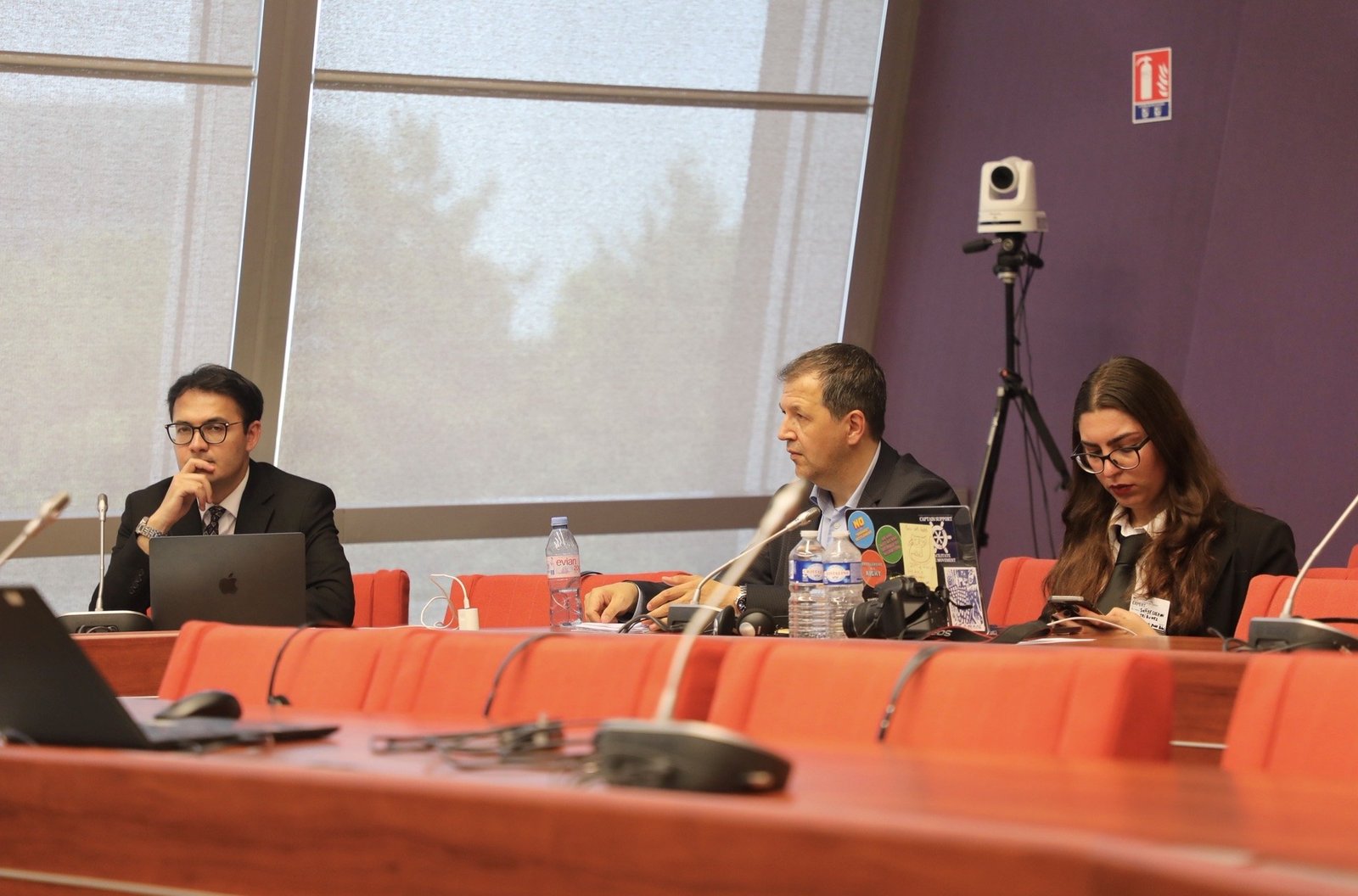
Chope gave a firm, perhaps counterintuitive answer. Sanctioning individual judges, he argued, would be a distraction one that could be used by those who wish to fudge the central issue. "These individuals are not acting as independent judges," panel members acknowledged. "They were rewarded with high positions for their role as hitmen in political cases." Anagnostakis agreed that the goal of any sanctions must be to send a clear message, not merely to Turkey, but to every member state: that judges who conduct themselves as political instruments will face consequences.
But Chope framed the deeper problem differently. Turkey, he suggested, has concluded not unlike some voices now prominent in British politics — that a supranational body has no legitimate authority over domestic decisions. If that is the position, he said, then Turkey should leave. "No organisation can survive with those conflicts in its midst."
He did not spare the Council of Europe's own leadership. "The Court, the Council of Europe itself and the Committee of Ministers are sowing the seeds of their own destruction by refusing to take on Turkey, while at the same time criticising politicians in the United Kingdom for being against supranational supervision."
The Leverage That Remains
Constantinos Efstathiou, whose quiet precision contrasted with the room's rising temperature, walked through the institutional record.
PACE Resolution 2518 and Recommendation 2261, adopted in the autumn of 2023, called for Magnitsky-style targeted sanctions against Turkish officials responsible for keeping Kavala in prison. In October 2024, Efstathiou initiated a motion for a complementary joint procedure against Turkey a mechanism that would have combined the powers of both PACE and the Committee of Ministers. It failed to gather the required 120 signatures. Geopolitics, he said, intervened.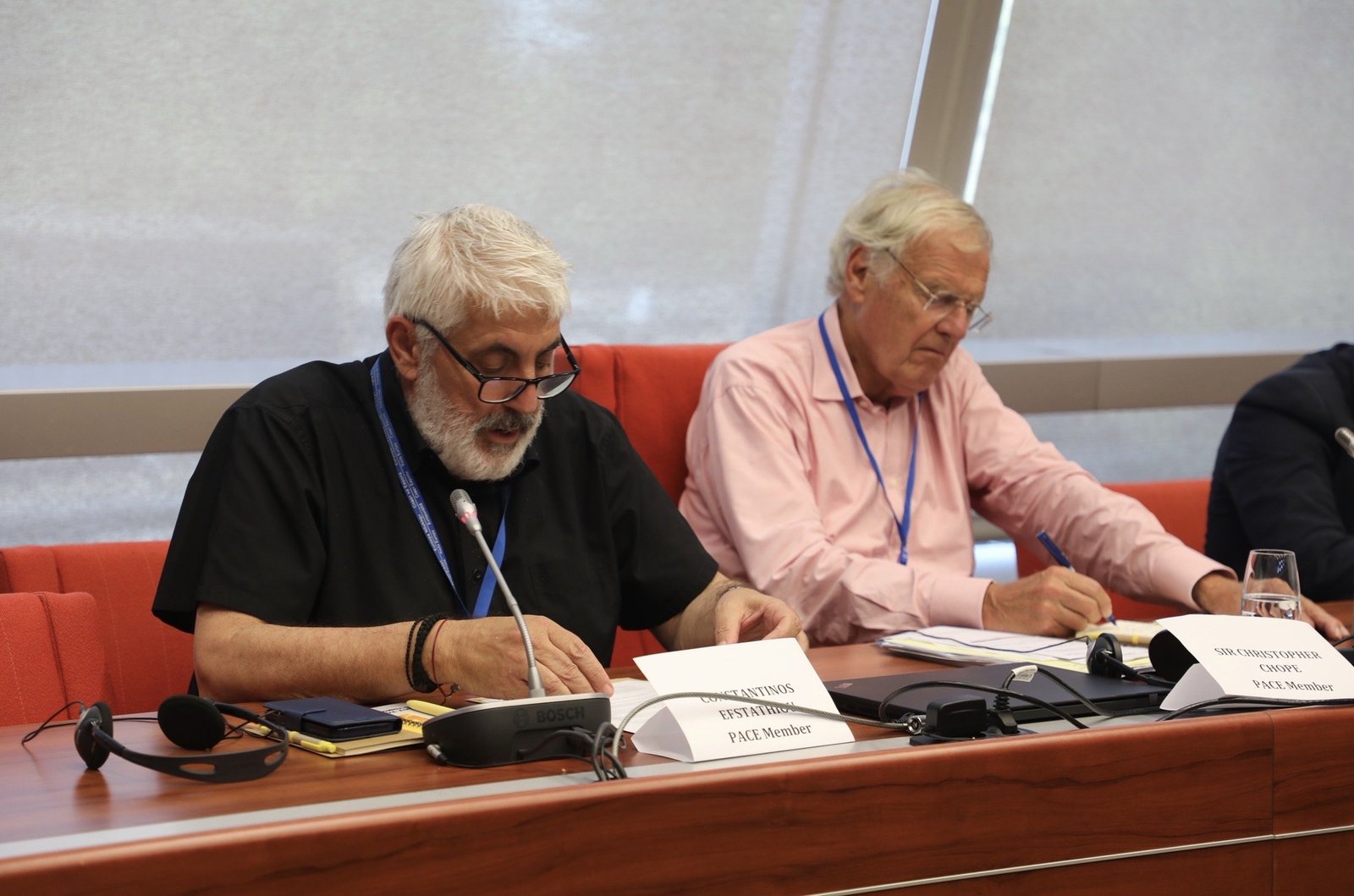
But the effort has not been abandoned. This January, Efstathiou launched a new motion calling on both the EU and the Council of Europe to impose Magnitsky-style sanctions on former and current judges and prosecutors responsible for undermining the Court's landmark decisions. By April, it had gathered sufficient signatures. The week before the side event, the European Parliament adopted an amendment calling for such sanctions to be applied to Turkey's current Justice Minister.
The motion is now formally on the PACE website. The plan is to use it to leverage pressure on the European Parliament.
Efstathiou's structural argument was quietly damning. Turkey's official claim that it complies with ECtHR judgments at a rate of roughly 79 percent is based, he argued, on counting simple, repetitive cases quickly resolved. It ignores the leading cases: those pointing to systemic and structural failures, which pile up unaddressed. "The rule of law can be established only when there are institutions to formulate it, maintain it and enforce it," he said. "Nobody was forced to sign and become part of this organisation. If there is a problem in the constitution, amend the constitution."
Evasion Tactics: A Pattern of Defiance
As detailed in joint briefings by Human Rights Watch, the International Commission of Jurists, and the Turkey Human Rights Litigation Support Project, Turkey's non-compliance follows a clear pattern. Prosecutors and judges simply ignore ECtHR judgments, continuing to prosecute and convict individuals on precisely the grounds where the Court has found systemic problems. They also repeatedly initiate overlapping criminal charges based on the same factual and legal grounds a tactic well-documented in the Kavala and Demirtaş cases, where judicial authorities reclassified substantially the same facts as new "crimes" to justify ongoing detention.
The government appears cooperative with the Council of Europe in a procedural sense, submitting regular action plans, but these submissions are evasive and hollow. Legislative changes presented as "judicial reforms" have often worsened existing deficiencies in Convention compliance rather than resolving them.
In some instances, Turkish authorities have explicitly refused to accept judgments, questioning the ECtHR's authority to assess the compatibility of domestic law with the Convention. President Erdoğan and his governing coalition have publicly attacked ECtHR rulings.
What Remains
The European Union, several speakers noted, has effectively lost its leverage over Turkey. The prospect of EU membership long the great disciplinary mechanism has been allowed to wither, replaced by a strategic partnership framework that prioritises Turkish cooperation on migration, defence and regional stability over democratic accountability.
That leaves the Council of Europe as the only institution with what Efstathiou called "real leverage" — the legitimate framework within which Turkey still formally seeks recognition. Whether that leverage will be used, and how, will be tested in the months ahead.
Stefan Schennach, who spent seven years as rapporteur on Turkey and visited Kavala in prison twice and Demirtaş with his deputy, offered a parting observation from experience. In Azerbaijan, he said, it mattered enormously that he visited three times a year. Sustained, repeated, visible pressure worked — eventually. "If you do not go many times, they will forget the prisoners."
The room in Strasbourg on 24 June was full. The question it could not quite answer was whether the institution it serves will remember them either.
The side event was organised by Human Rights Solidarity and The Arrested Lawyers, with the sponsorship of Sir Christopher Chope MP, on the margins of the PACE Summer Session in Strasbourg.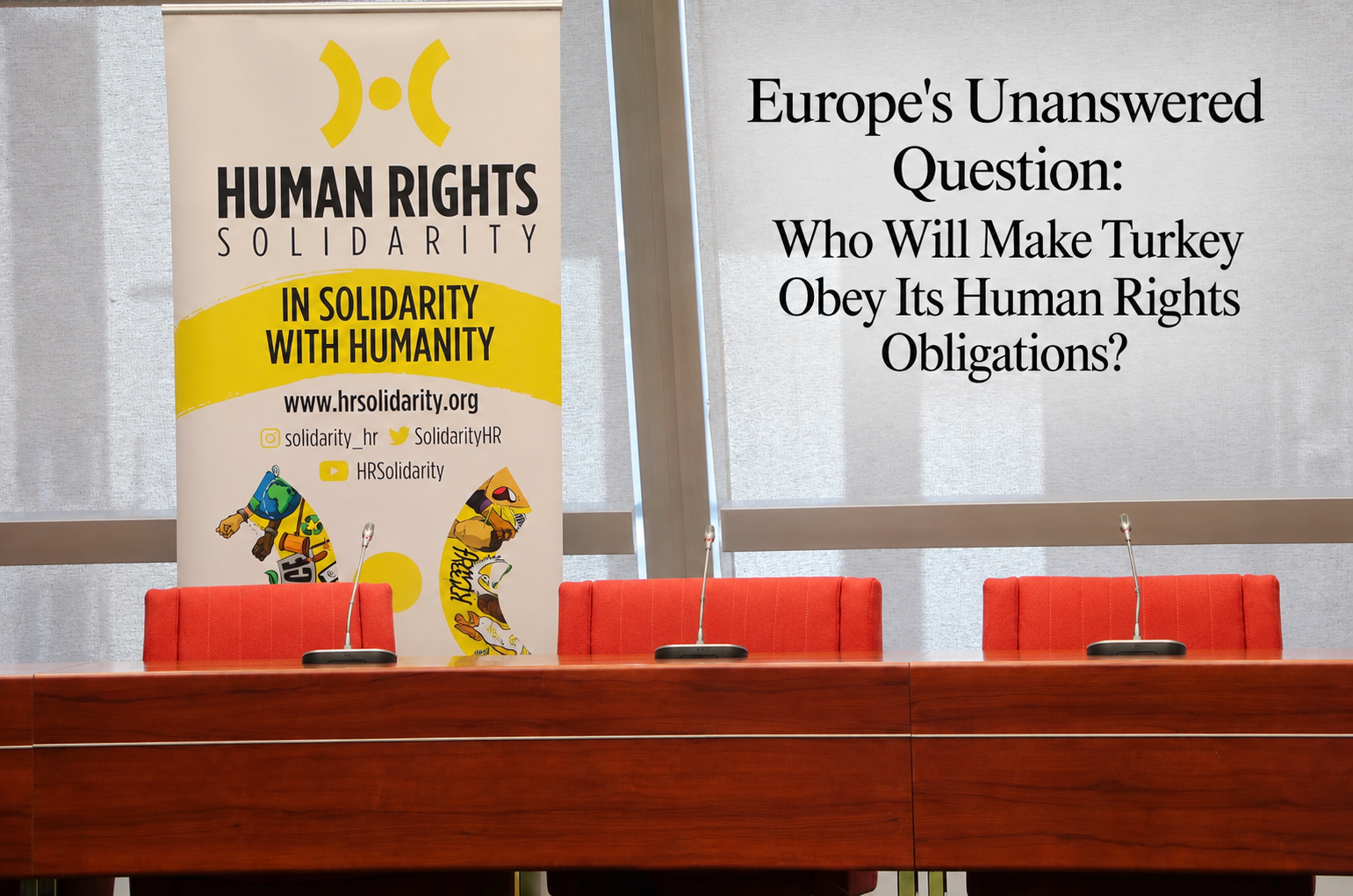
Tarlan Novruzov